Due in no small part to a connection from a close friend, I’ve recently begun some business with a local/national herbalogically-minded, interior decoration-based company. I suppose that’s a bit wordy, but it’s a pretty accurate description of what these folks do.
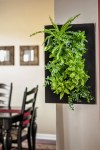
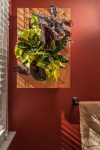
The company is BrightGreen and they craft “Living Walls.” These guys —->
Basically, imagine a unit that allows plants to grow vertically on a wall instead of on the ground or in pots. Also, because each unit can hold multiple small plants, you can essentially plant designs on the wall that match the decor and such.
Over the past coupe weeks, we began work creating imagery for the new product from the company, the “Grovert.” It’s the plant-it, hang-it, grow-it yourself unit for sale at plant nurseries in the Midwest.
Here’s a bit of of the project – a few of my favorite shots. What do you guys think?
As you may have noticed (or maybe not) I’ve been lacking a bit on getting up “the content.”
Well, sure, I’ve been busy with some jobs – BUT – more importantly…
Jon’s learning video.
Yes indeedy, folks – while I will always rock out the single shots, I’m starting to love me some 24FPS. So with no more rambling, please take a gander at my very own promo video!
Oh – be sure to watch it in HD – it’s just that much better.
Hey y’all! Sorry it’s been a bit since the last post – Finals week sort of took up my time. But now I’m back and ready to rock out some new work!
Let’s start with a finish. Over the last few months there have been regular posts about a series of group adverting projects. We’ve seen hygene products, security systems, summer-y desserts… No we finish the series in the real estate industry.
Our task for this last project was to design a pair of single page ads, a 2-page spread, a billboard, and a commercial. The task was intended to focus on the service industry, so we chose the real estate sector (specifically residential real estate.
I’ll skip the long-drawn breakdown of why we did what we did – Enjoy!
Oh – and fair warning: the video is REALLY cheesy.
This has been in the works for about 3 months now.
Since the start of term, I wanted to put together a booklet – kind of like a process book (showing clients how I get to the end of a project). So, I did.
I won’t ramble about it, as it’s intended to be fairly self-explanatory. I wouldn’t mind some thoughts and opinions, though.
I’d like to follow up my post from a couple weeks ago regarding retouching and the general process of “Photoshopping.” To be clear this is not really part 2 of that post series. That will be on it’s way in a few days. This is more so the other end of the argument.
While it’s the best possible choice to get things right in-camera, sometimes it’s just not an option. By just not an option, I mean nowhere remotely close to an option. A good example is advertisement photography.
You probably know that no product or service is ever the same as you see it in an ad. EVER. If you disagree, I’d like you to compare your Whopper you’ll be having for lunch with the one on the menu. Sure – this is slightly different issue. That burger never existed in the first place – it was made out of mashed potatoes and spackle before the picture was even taken. Instead, let’s focus on something clearly different than the original picture.
You’ve probably seen this video:
That’s an issue that happens more than you’d think/more than you’d like to know/ALL THE TIME.
However, there is one reason to justify such an obscene level of post production – finances. Sometimes it’s just impractical to fly a model to outer Mongolia. If there’s a small budget, if time constraints are fundamentally impossible, or if the picture of the setting already exists – sometimes the picture can be stitched together later. Now, I know what you (might) be saying: “Where’s the photographic skill? isn’t that just going to breakdown to someone drawing on a computer until the final image looks ‘good enough’ ?”
Not really.
Sure -there’s a descent amount of isolating, some burning/dodging, and a handful of trial and error. BUT…
The picture still HAS to be correct in camera. In many ways, it has to be “more correct” than a normal picture. It all comes down to my favorite part of photography: LIGHT.
If the background was photographed outside at sunset and the person/object was shot in a black studio with on-board flash, the color, angle of light, depth of field, and separation will look completely wrong . So many factors have to be considered, I feel this type of post production absolutely qualifies as “good photography.”
Of course, I’m always open to comments and varying opinions.
That said – here’s a small sampling of some “image combination” I started as a side project a number of months ago. Let me know what you think!










 JonKPhoto